In August of 2022 I acted on a dream and built a sunken greenhouse. We are avid gardeners and preserve much of what we grow for the winter. I wanted to be able to grow food year-round and also grow a few trees that would not be able to grow in our temperate Iowa weather. I ran across Russ Finch from Alliance, Nebraska and he had designed “Greenhouse in the Snow” ( Greenhouse in the Snow | Geothermal 4-Season Greenhouse | 1114 W 2nd St, Alliance, NE, USA). I watched all of his YouTube videos and other videos of growers who either bought the system from him or had created a design of their own. Since we, my husband and I, are not super engineers or carpenters I thought it best to invest in Finch’s kit and find some local tradesman to help us make our idea of a geothermal greenhouse come to life.

Construction Begins
We received the greenhouse kit for Greenhouse in the Snow with a manual of a step-by-step process of how Finch had built his greenhouses. He even included what I would consider his log of trials and errors. It was very detailed and helpful, but with every build comes different obstacles.
The first challenge was to plan the site so that we had enough room to run the 250ft. geothermal lines without running into the barn we have on the north side of the site. We took this picture from Finch’s “Greenhouse Bible”, as I referred to it, and designed our dig accordingly.

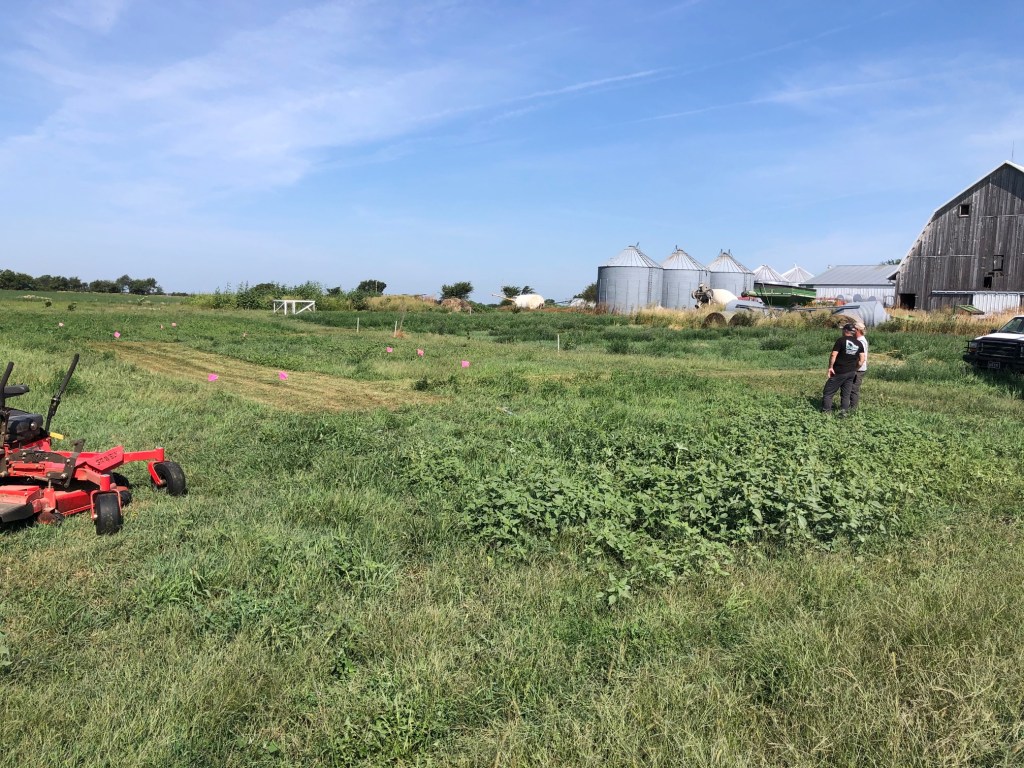
So here we are planning our site by mowing the grass down and getting a visualization of the dig zone. It is very nerve wracking to do something that no one in our area had done before and most people thought we were a bit crazy. They probably still do!
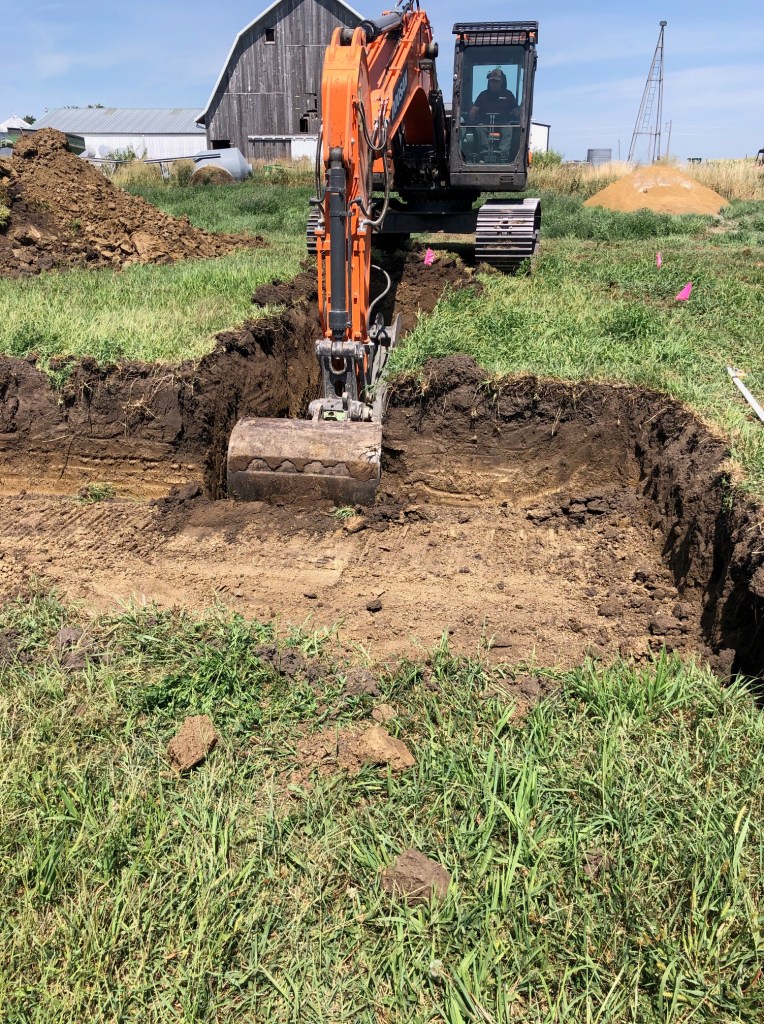
When the excavator started to dig there was no changing plans. We had to dig a 250 ft. tunnel 10 ft. deep so the air travelling through the tiling tubes will stay at a constant 50 degrees all year long per Fitch’s design.
Note: I set my thermostat at 55 degrees Fahrenheit in the winter to keep the warmer air circulating into the greenhouse. In the summer, the thermostat is set to 75 degrees Fahrenheit to cool down the hot days.

Here is my husband Chase. I am lucky he wanted to grow year-round as well because the geothermal implementation process was very tedious. (We have both decided it will be a long time before we do something like this again!)
Because our greenhouse was 13 ft. wide and 78 ft. long with an area of 936 square feet it was suggested by Finch to lay 12 tubes through the trench to get enough air flow to maintain optimal temperatures.
Since our soils are less sandy than what Finch experiences in Nebraska, we chose to use double-walled 4″ perforated tiling. This variant of tiling only comes in 8 ft. sections, so we had to fit all the pieces together and tape them with tiling tape. This was a job. We then covered the tiling with a layer of sand to help the tubes be more supported when the heavy clay and black soils were packed back on top.

Once we had the geothermal tubing system imbedded into the trenches, we moved on to the actual greenhouse structure.
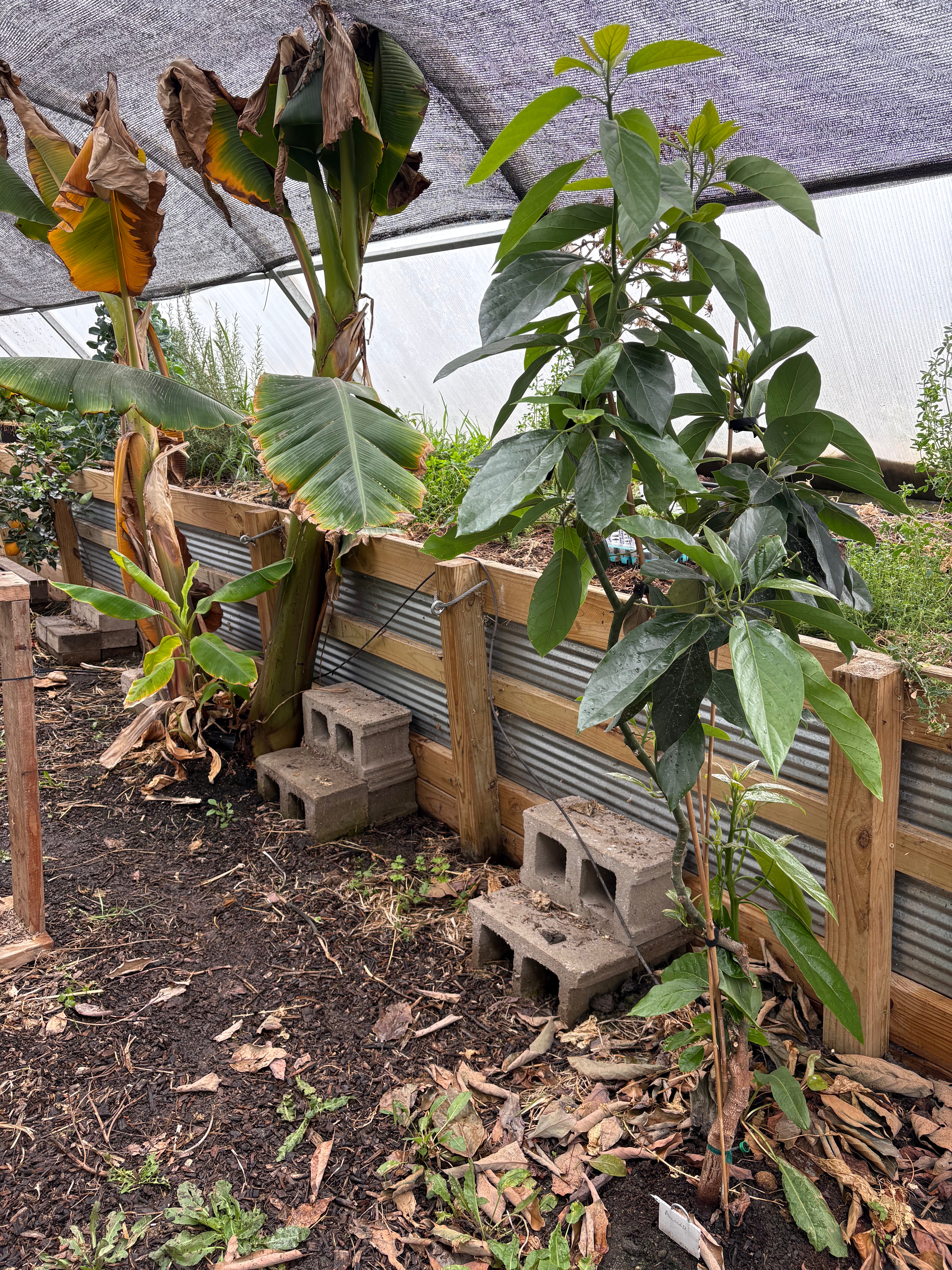
We used a Dingo to drill the holes of the treated posts and then treated 2×4’s and aluminum sheets to enforce the retaining walls. We had terrible time with the posts pushing forward once we backfilled the beds….in hindsight we should have concreted all the posts prior to filling but I was trying to be green and not use cement.
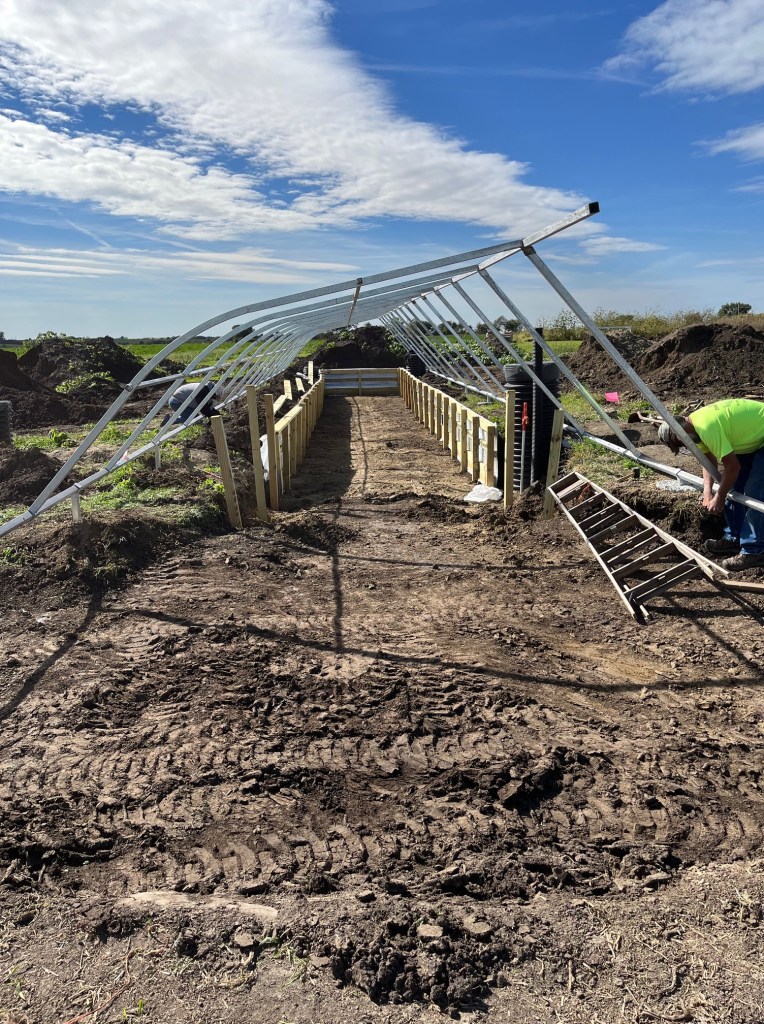
Once we set the retaining wall we had a couple carpenter friends come and help us square the perimeter and set the tubing the structure attaches to. We also set these posts a little lower than what we had planned and made our greenhouse structure not as tall as we would have wanted, but it is working and will be fine.

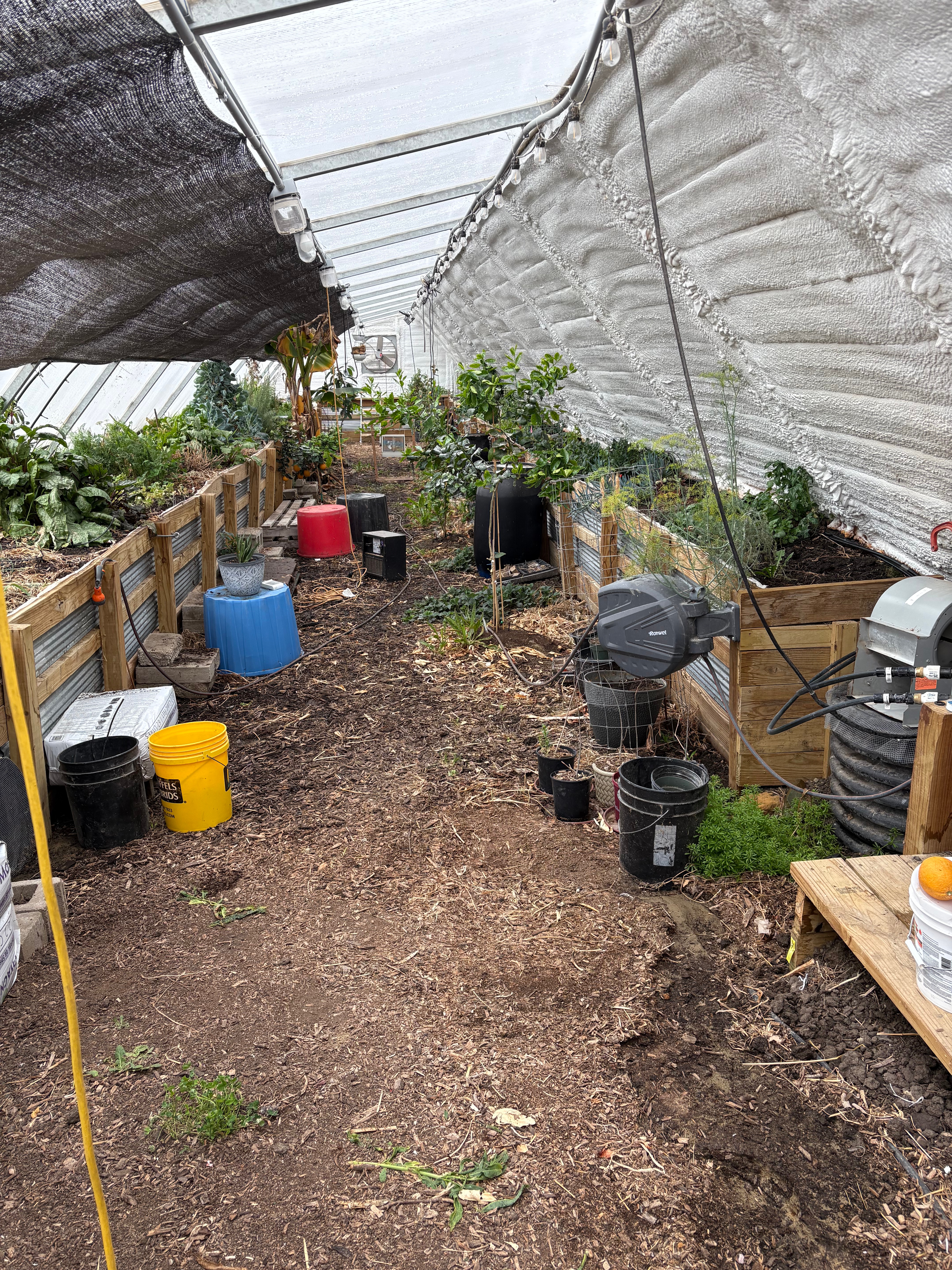
Last step of major construction was to fill dirt and and put the exterior covers on. The North, west, and east sides have steel siding. The south curvature is a special plexiglass.
We also put a ventilation fan in the west wall and a door in the east wall. For the finishing touches we installed electricity for the blower fans, thermostats, and above head lights and electrical sockets. We also installed a hydrant for a convenient water source and put spray insulation on all walls except for the plexiglass.
Year One
It was late fall when we completed the construction, so I did not do much with the space for the winter. We planted our first seeds in the first days of March of 2023 and found much success and each year comes with a new problem and a learning curve.
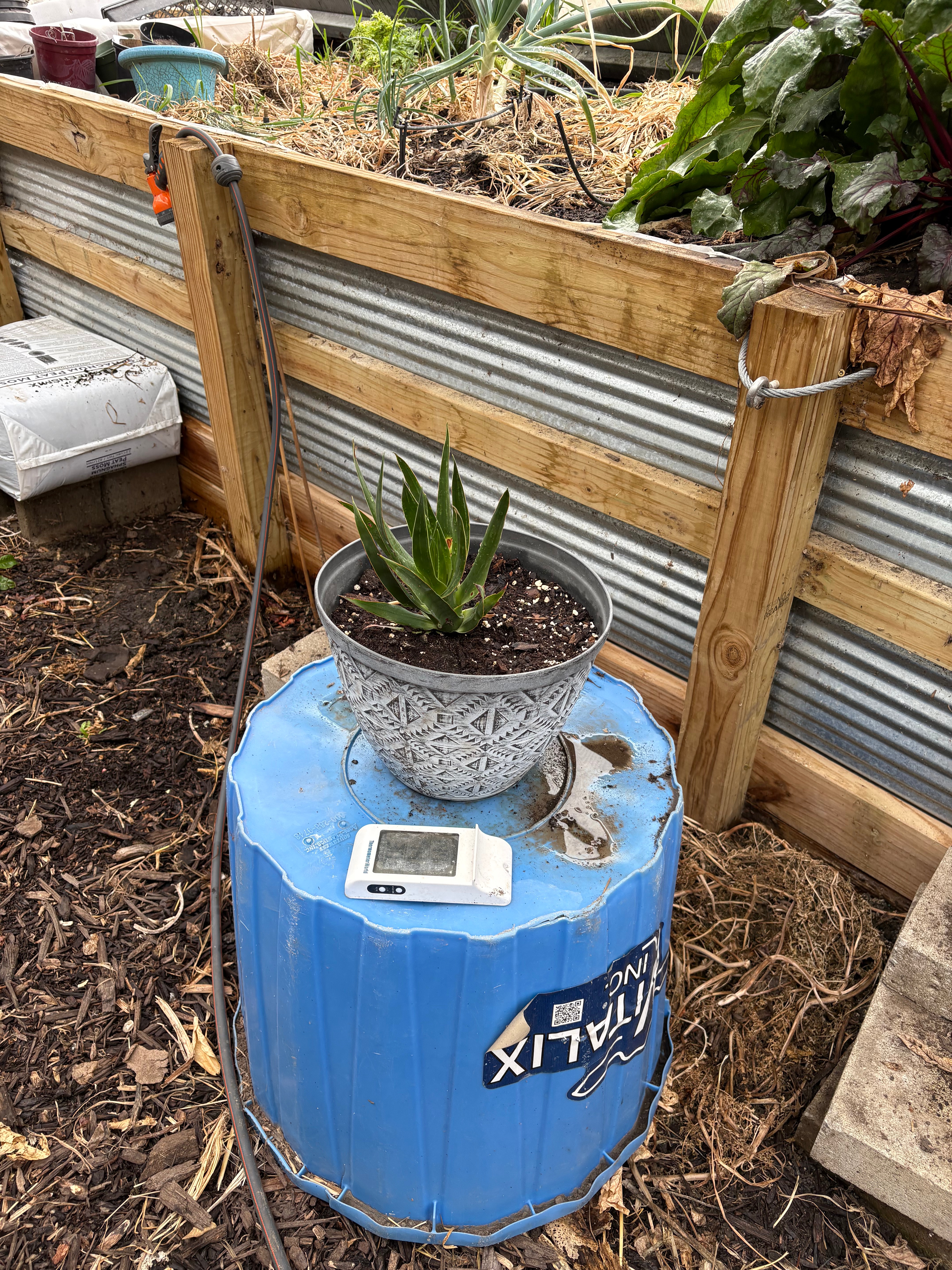
I will say that the greenhouse does get very hot in the summer, and I had to start leaving the door open in June and July to prevent my plants from scorching as the geothermal does not cool enough on the really hot days. I did install an automatic irrigation system, and it helped tremendously.
In the winter, when temperatures get below -10 degrees Fahrenheit for extended periods of time with overcast skies, I lost a few plants that were not growing on the floor and all of the plants located on the west end of the greenhouse by the ventilation fan.
Year Two
Year two was the year of learning about pests. We had mice and rats galore invade our growing space. We set traps and ended up setting poison out to control them. We also had insect problems I could not get under control with all the organic practices I attempted. I ended up spraying Spectricide Triazicide Insect killer because all of my vegetables were being eaten to death. I am not proud of this, but I had to get the pests under control before my next growing season. We also invested in a heater for the super cold winter times, which prevented any frost death.
This year
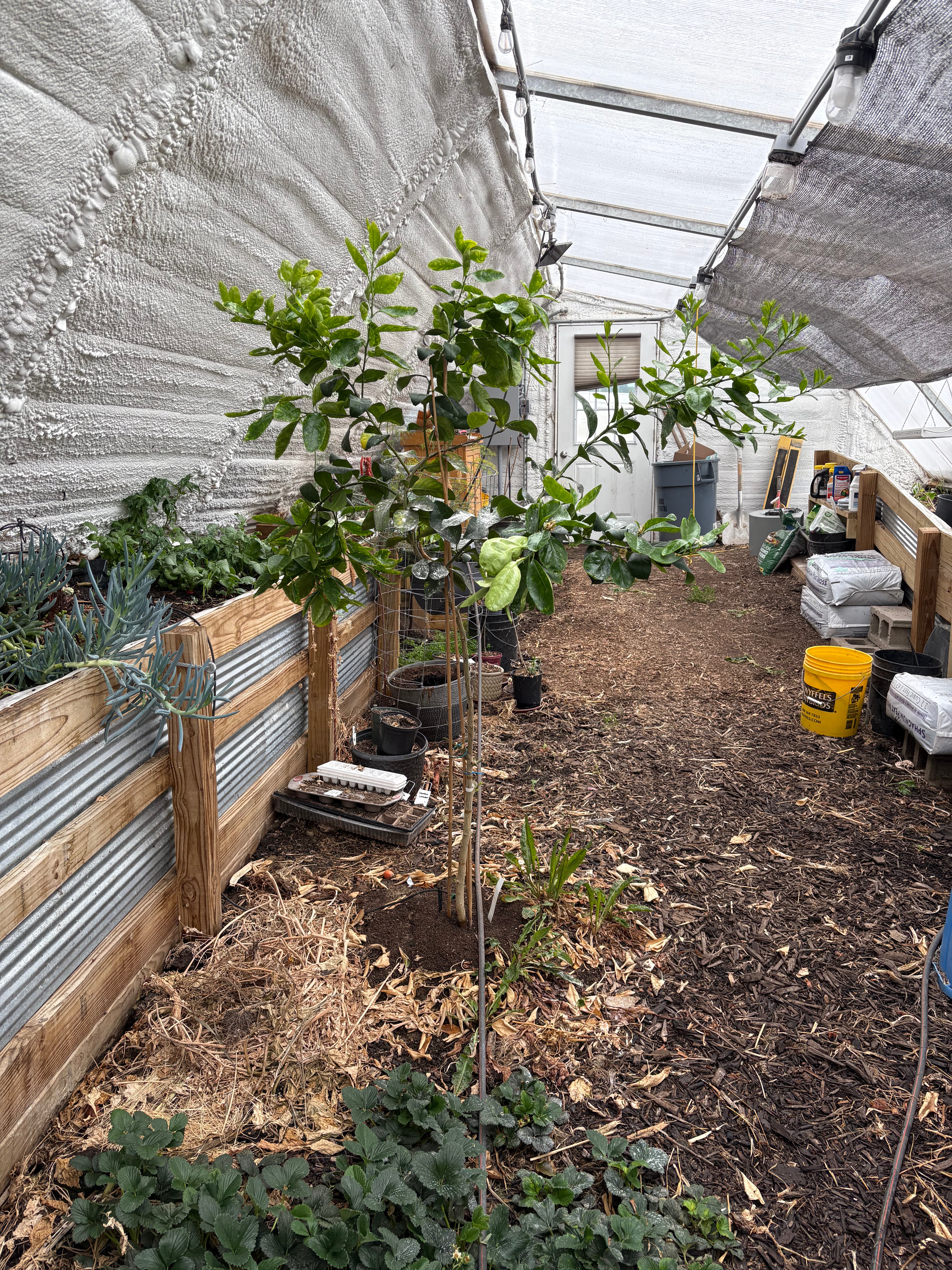
I am currently growing seedlings again. I do have all my fruit trees growing, and I could grow carrots, beets, onions, herbs, and one green pepper plant over the winter. My ultimate goal is to have tomatoes, pepper, onions, and cucumbers available all year round for me and my family to eat. I am going to stay on top of the insects this year and try to not allow them to overwhelm the system again. I have also invested in some organic fungicides to put on my tomato plants and fruit trees.
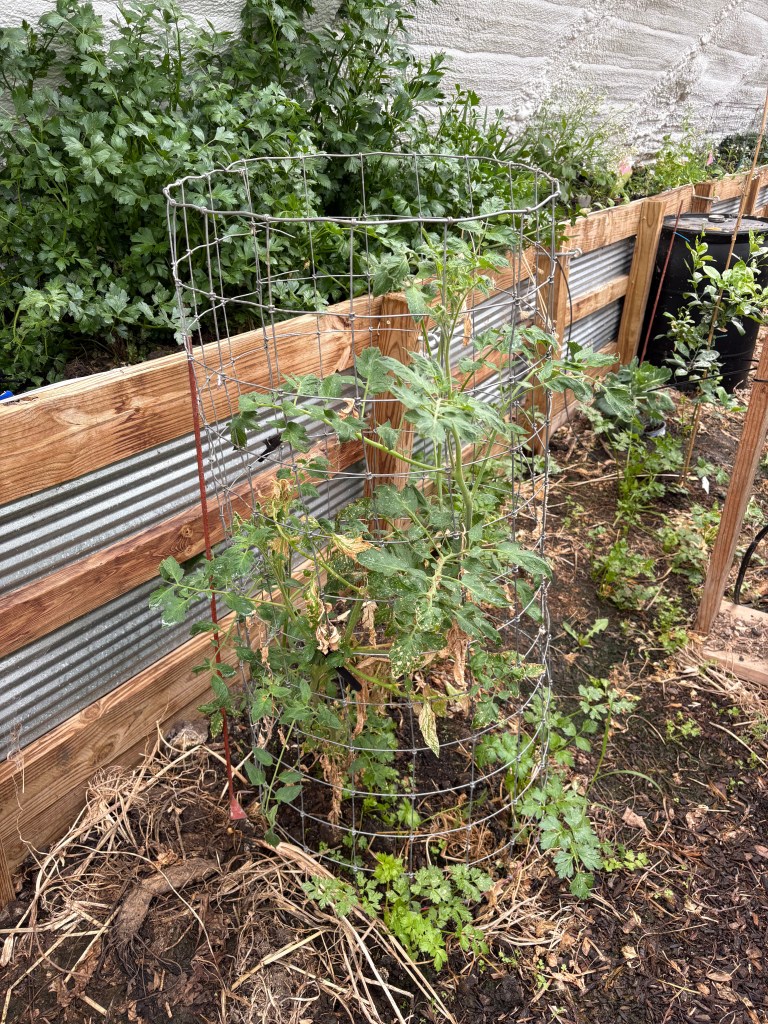
I have yet to successfully grow tomatoes due to insects, blights, and fungus; but I am very close as I have a plant that is blooming and ready to set fruit any day. You will see this flowering tomato plant below and my celery patch behind that I use all winter to cook with. I also use the celery to add flavor to my canned spaghetti and tomato sauces.
MY TREES!
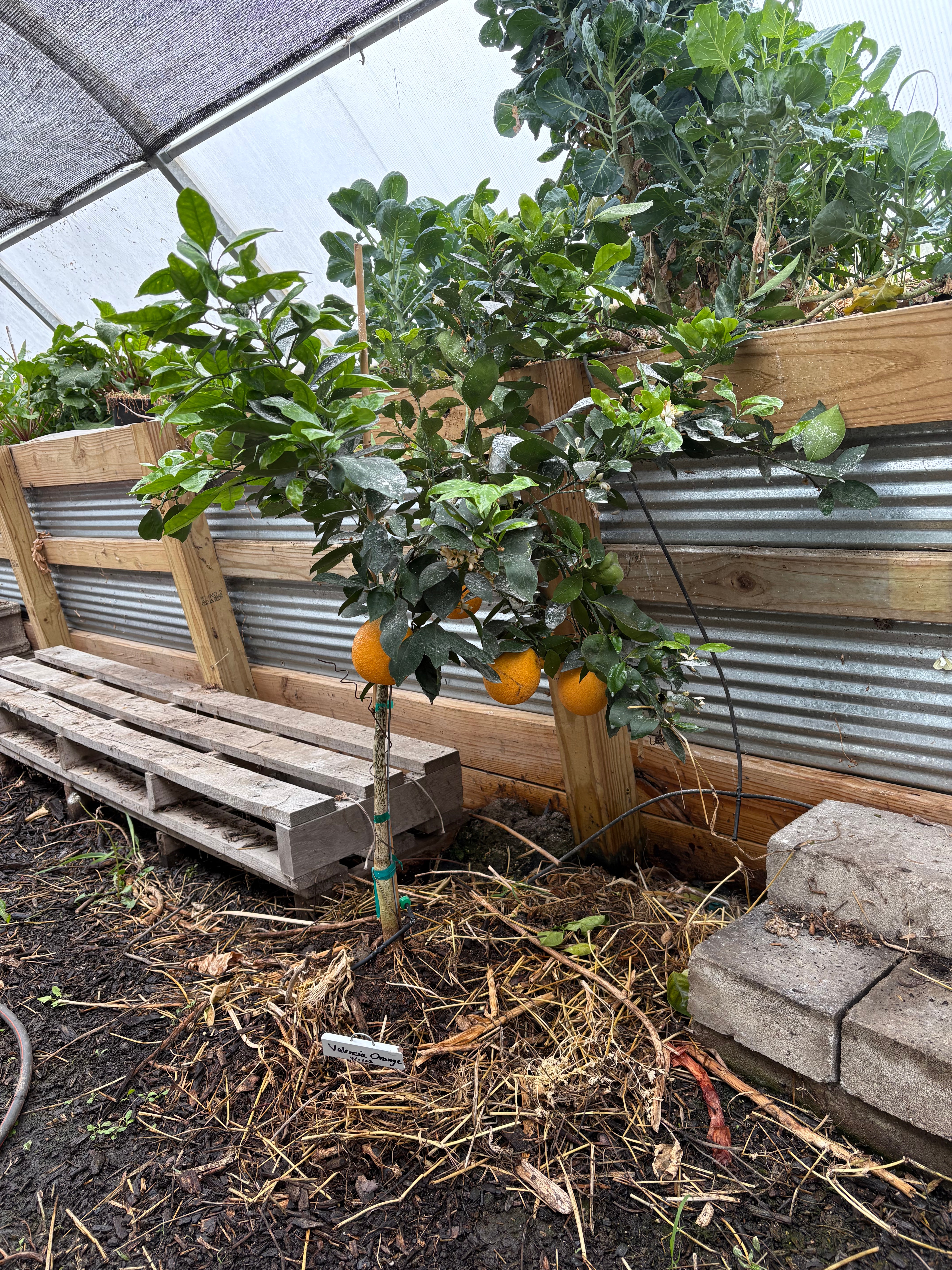
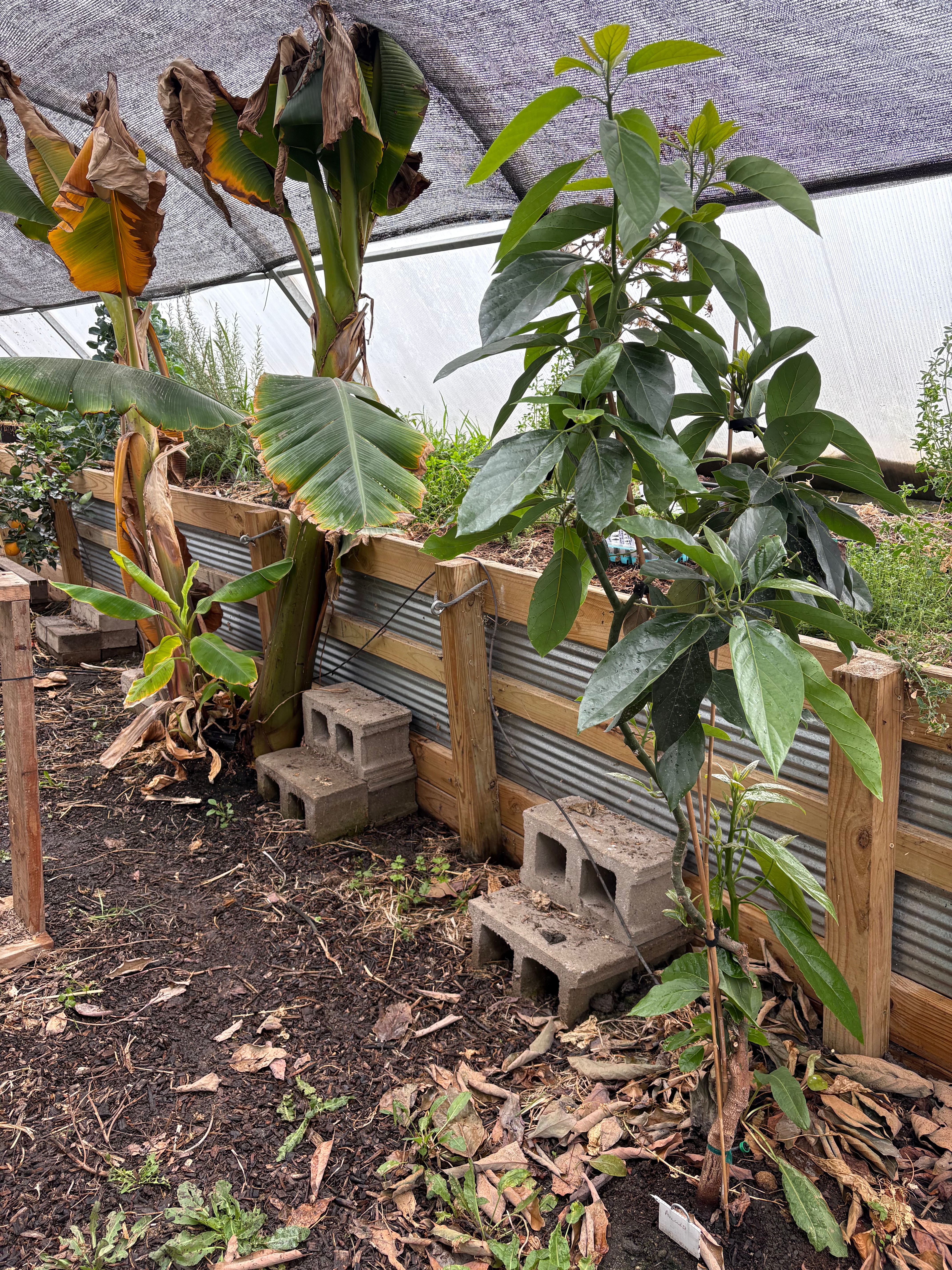
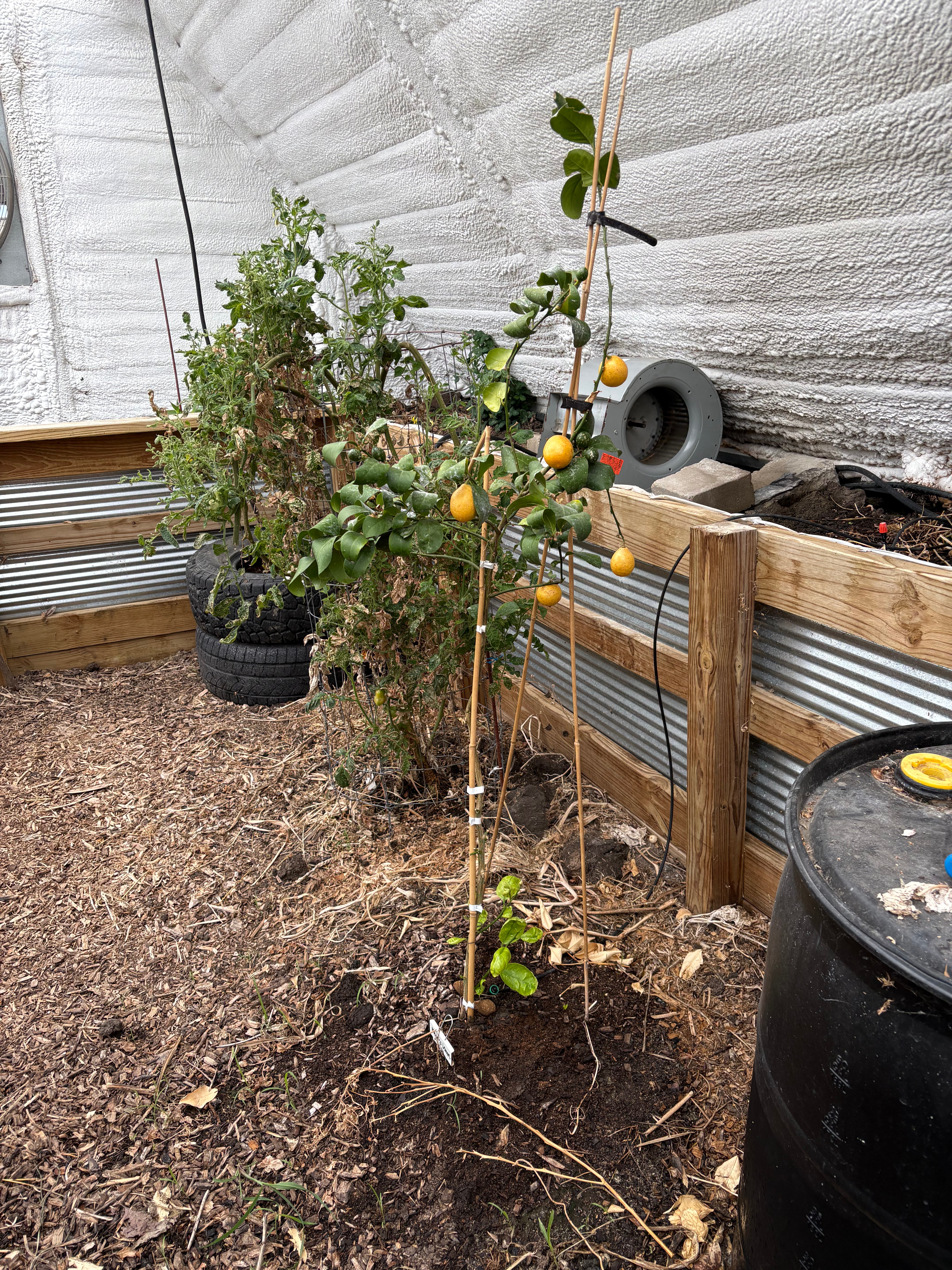
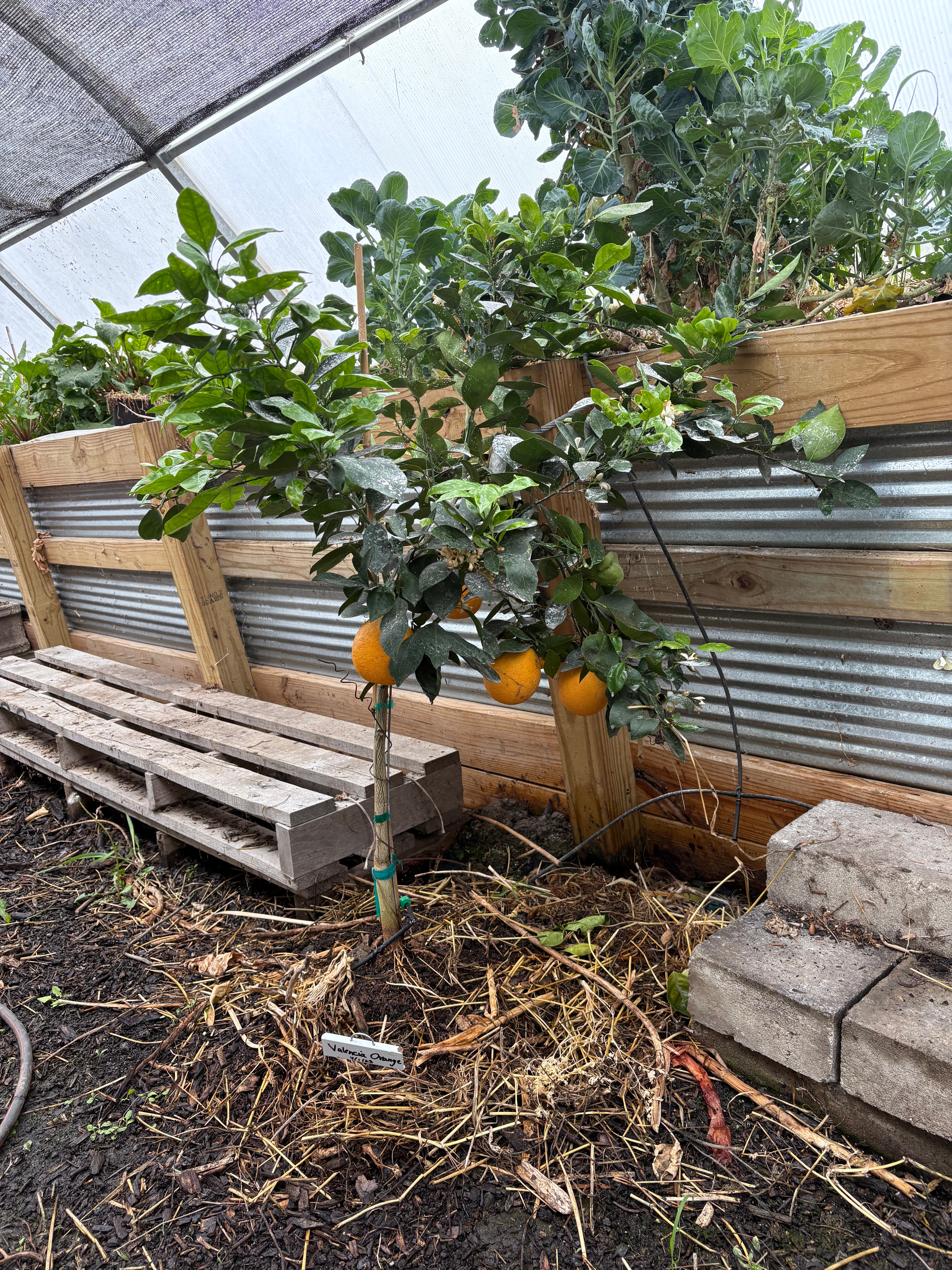
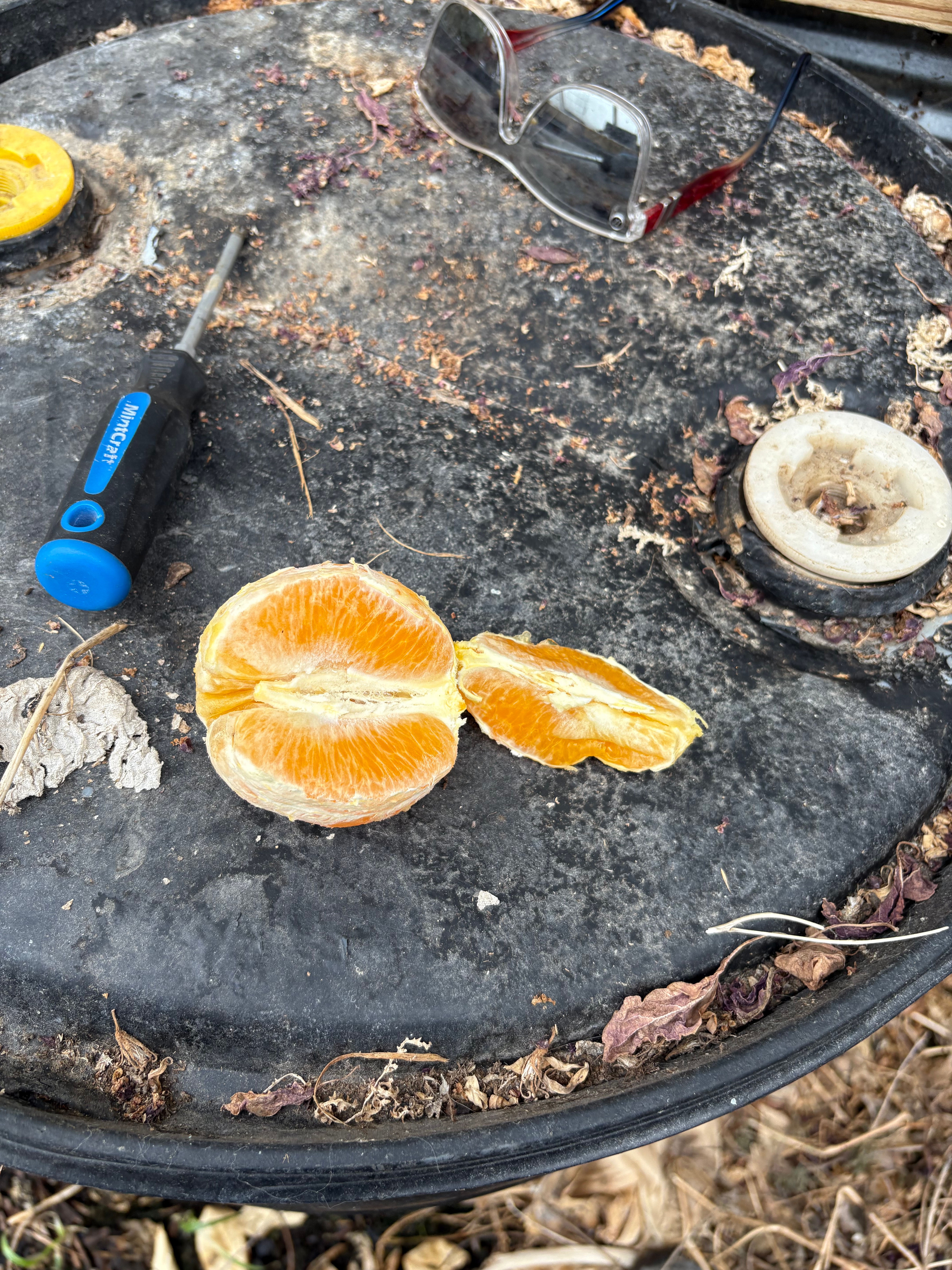
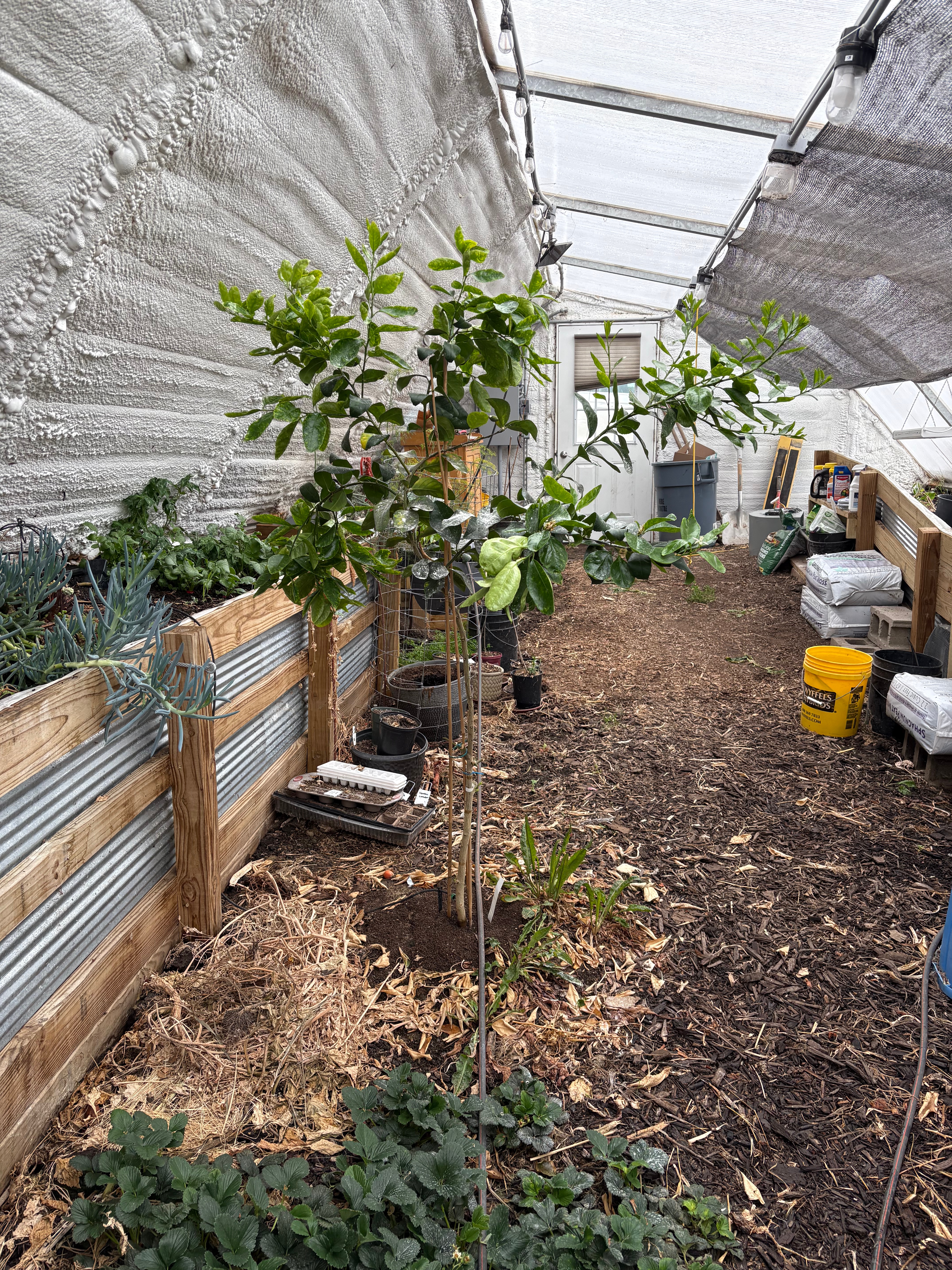
These trees are the reason I started this who project and I just wanted to highlight where we are with them. I had them in 5 gallon buckets for the first year because I wanted to be able to transport them out if the weather was too cold in the winter. Once we invested in a supplemental heater I put them in the ground. I have harvested a few lemon, limes, and now 7 oranges so far! I hope to add a few more trees in the future to increase my shade canopy in the hot summer.

Thankful to the Max!
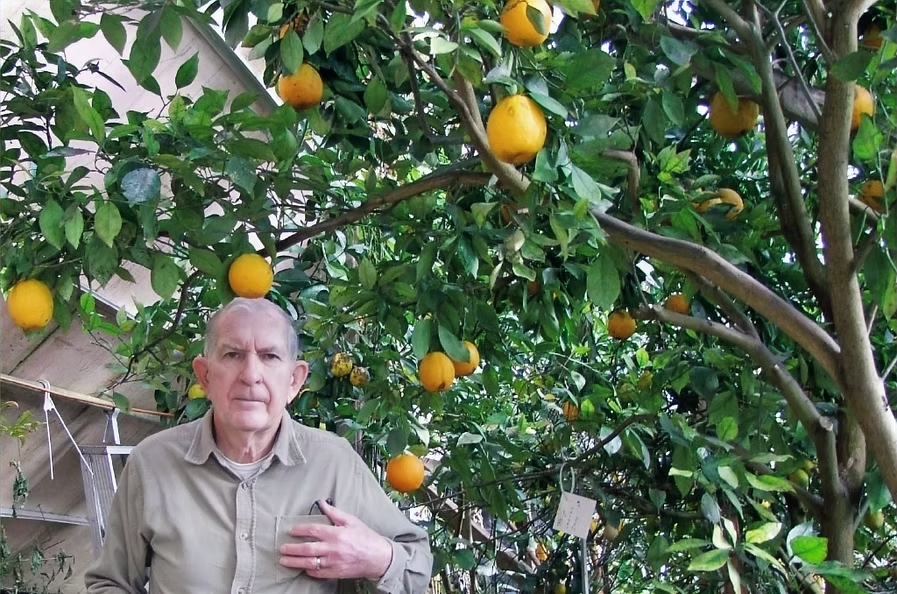
I cannot say how wonderful Russ Finch and the Greenhouse in the Snow crew was when I had questions or needed guidance on this build. Russ has passed away, but it appears his legacy goes on as Greenhouse in the Snow is still in operation. I will forever be thankful for him. Please look them up if you are wanting to replicate a project such as this. It is the real deal.
(https://www.greenhouseinthe snow.com)
(https://www.greenhouseinthesnow.com)
I also am so thankful for our carpenter friends Jack Beggs and Chris England who patiently tackled the unknow with us. We also had the help of Josh Strong and Kim Watson on the geothermal portion of this project and it was a bugger! I appreciate their willingness to learn new things and work very hard for an experiment that could have gone very bad. Lastly, our electricity and water line would not have been hooked up in a timely fashion without our dear friend Clint Drake. He is invaluable to us and our operation.

 Farmalltheways.org
Leave a comment