Windbreak – trial and error
In 2017 we built a house in the middle of a corn field. The wind blew hard during the first winter. The north and west walls of our home were very cold because of the unrelenting gusts. The next spring I designed and planted a windbreak to save us from the winter cold.
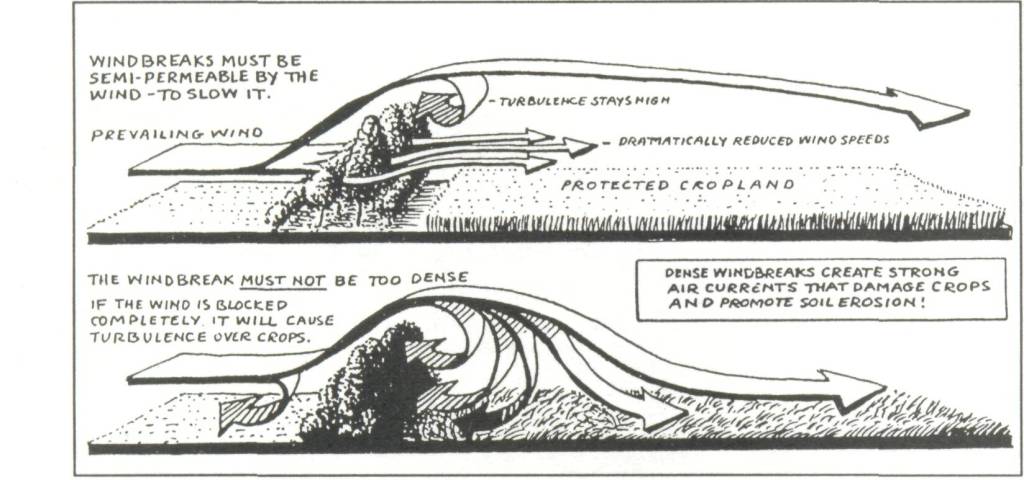
To do this, I made a string line with posts for the entire line I intended to plant trees. I planted the trees 10 feet apart within the rows and each row had a distance of 15 feet from each other. The first row was planted 75 feet from the front of our house and the trees were supposed to ascend in height with a row of bushes on the backside as a wind lift. I had done my research. In the image below I designed and planted my trees in a fashion where my house would have been in the cropland on the righthand side of the windbreak.
The first year, I ordered trees so as to follow my research and ordered 3 sizes of trees and bushes to go on the front side of the windbreak. Little did I know trees do not like to be planted straight into crop ground and my success rate would be very low. I think out of the 120 trees I planted about 50% lived…..if that. I did calculate the number but did not record it anywhere because it was so terrible and anything in the “F” range is still a fail no matter the exact number.
But I was not to be deterred. I ordered more trees. This time ordering more varieties that I found to be more attractive or more interesting because of where they originated from. I began to collect species of trees and insert them into the spots where I lost. I stopped following the windbreak instructions and started differentiating and collecting.
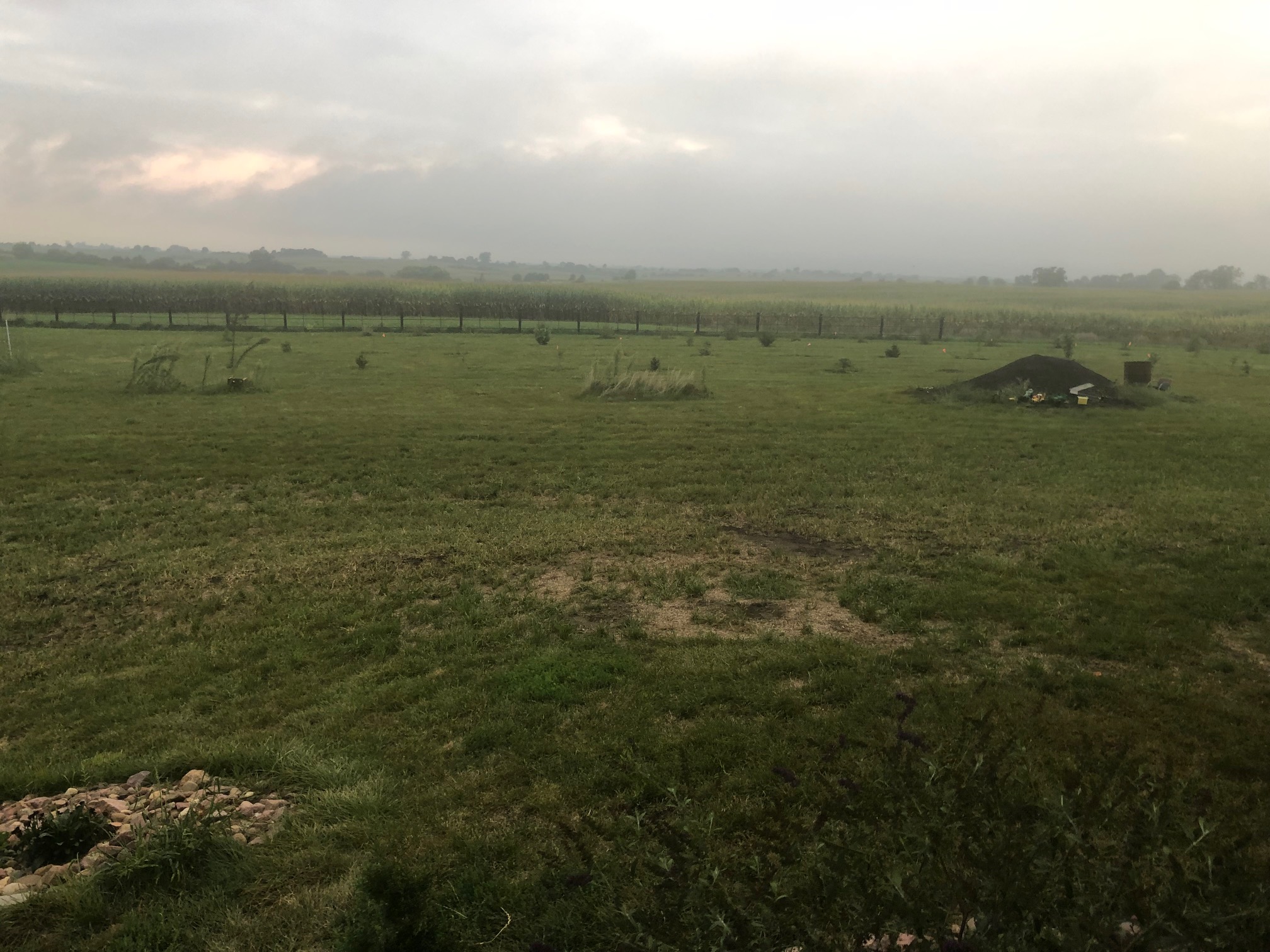
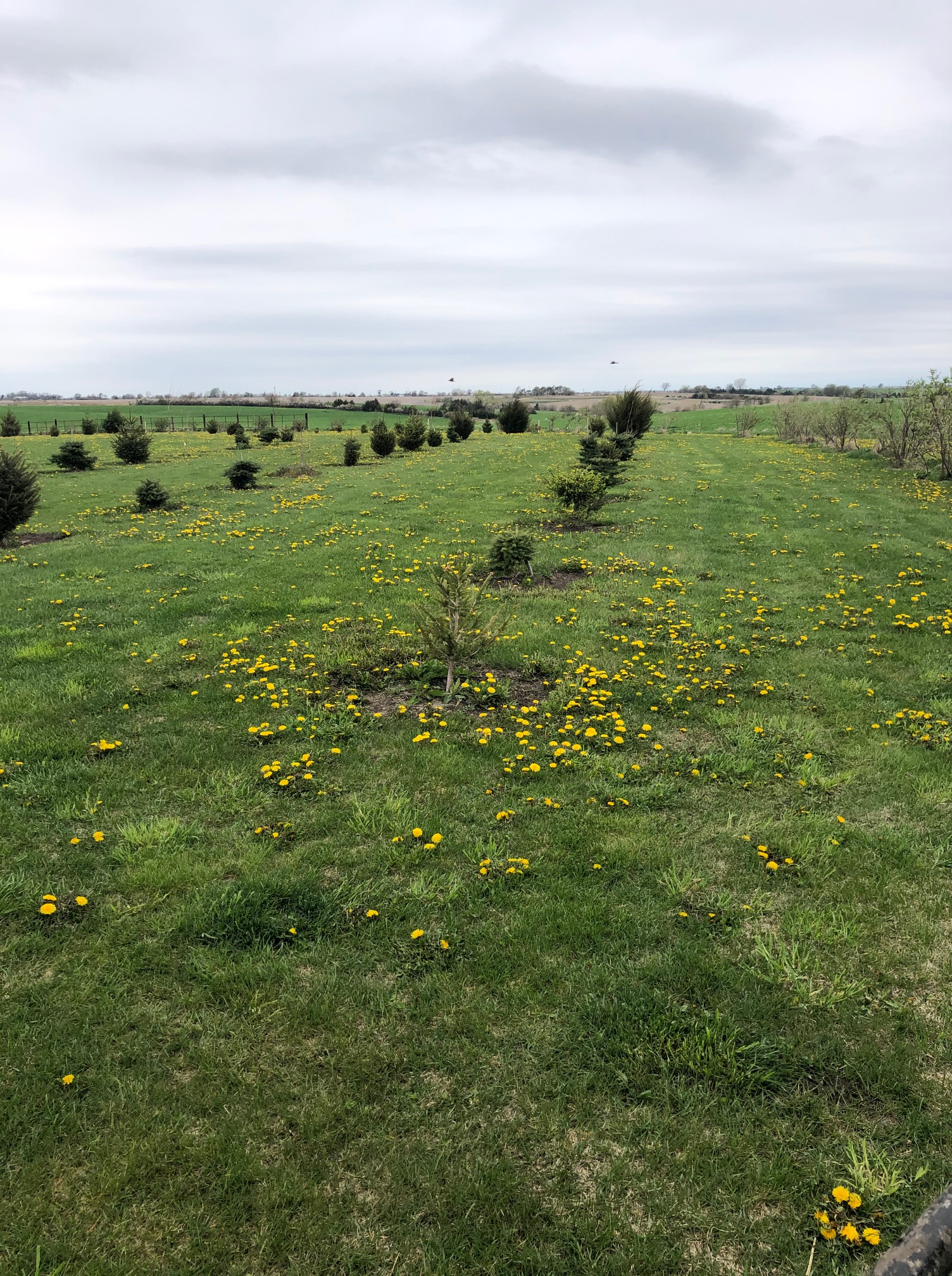
The two pictures above are my windbreak in 2019 and 2022. As you can see the trees don’t seem to be growing at a fast rate. I would tell you that is absolutely right. I have replanted and replanted and replanted trees of all kinds. The trees that actually grow the best are the transplanted red cedars from our ditches. Maple trees also grow like weeds but are softwoods and don’t have a long life span, so I intend to cut those down at some point. My Tulip tree is growing amazingly, as well, but has yet to set blooms, and not sure why that is as it is supposed to be self-pollinating.
The indigenous species like the white pines, red oaks, and spruce trees have the second fastest growth rate. My Korean firs and Ginkgo trees are the slowest growing trees, but I have not had to replant them so at least they are alive. I have attempted to plant 3 different cold-hardy Magnolia trees and have had little luck. The current Magnolia I have is about 3 feet tall but for the last two years I have seen little progress. Maybe this year will be the year!
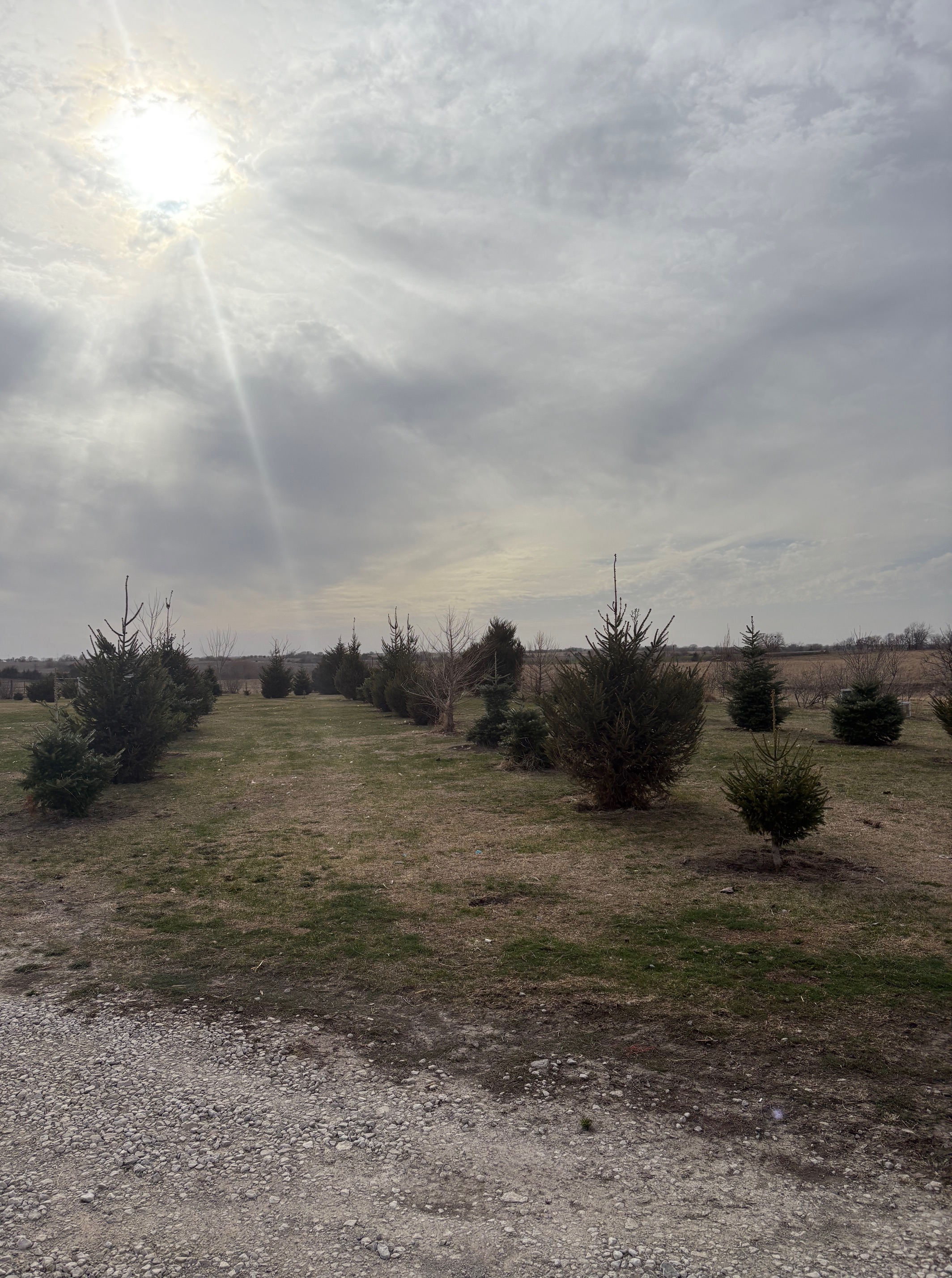
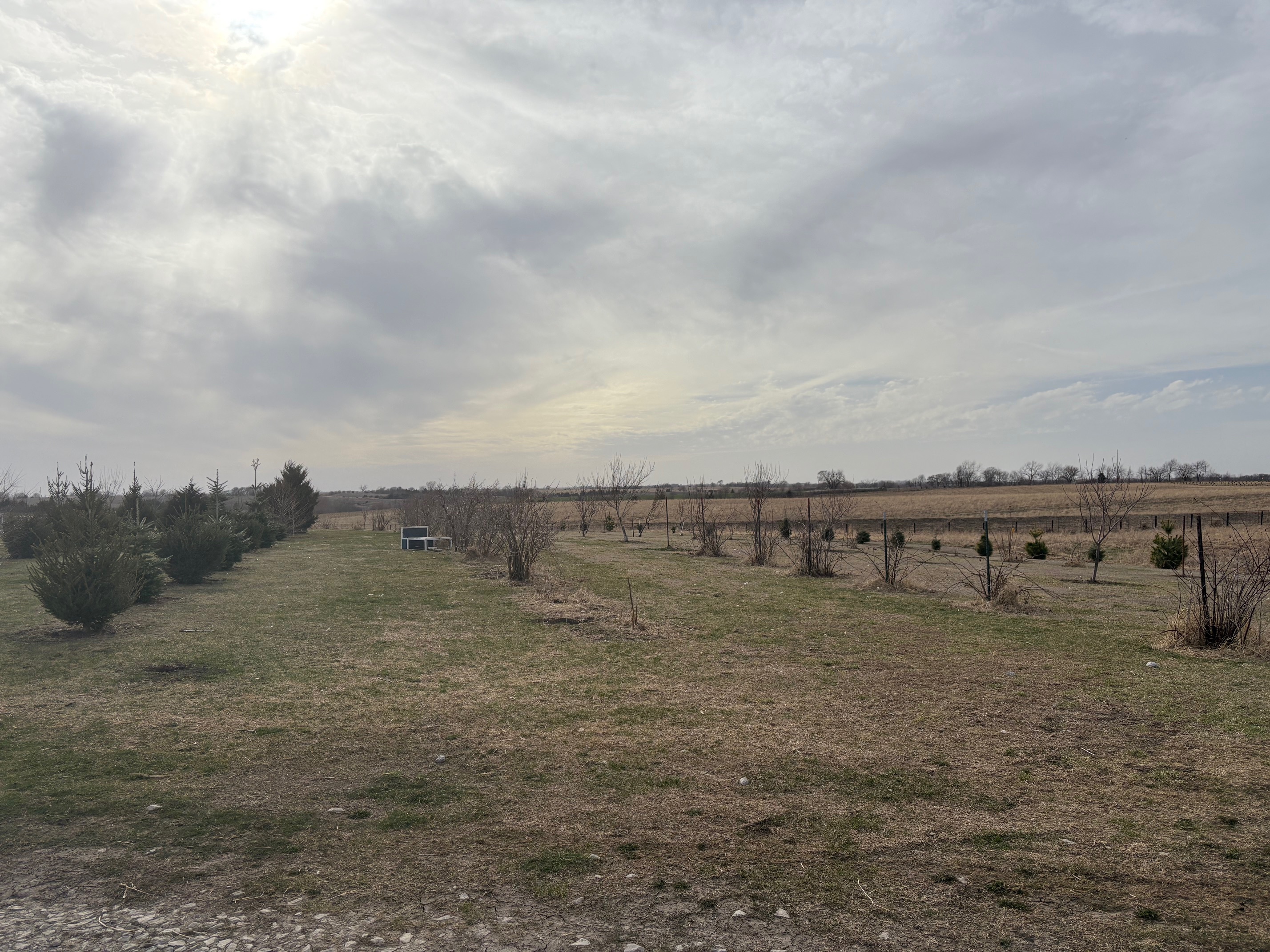
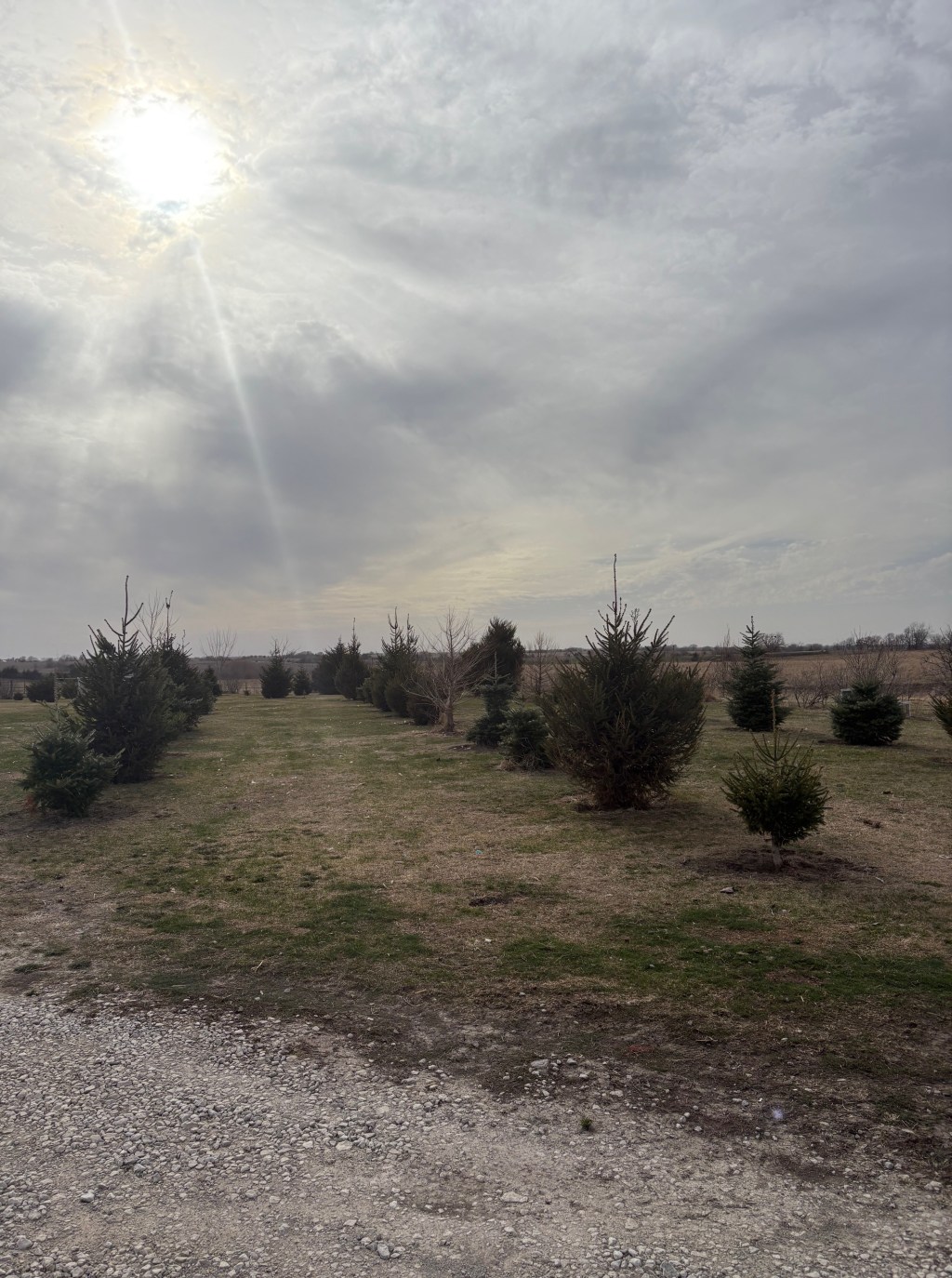
This is my windbreak currently in 2025. Many of the trees I have planted are now 5 feet tall. Some are 10 feet some are 3 feet. I think I only have two or three spots where I could replant a tree but the not sure if I will as I may just give the neighboring trees room to fill in the gap.
In the right picture you will see the North side of the windbreak. The row right after the evergreen trees are Elderberry and Aronia berry bushes. I panted them 10 feet apart and should have gone at least every 5. In front of the bushes is my orchard. I have planted different species of peach, pear, apple, and cherry trees. I also have blackberry and raspberry bushes planted on opposite sides of the orchard so they do not cross pollinate. As of the summer of 2024, we were getting lots of berries, a few apples, and a couple of pears. I have had to fungicide with Captain Jack’s Copper Fungicide and add neem oil to the mixture as an insecticide. The trees should be sprayed every 10 days or so to keep disease and critters at bay. I had no idea that fruit trees would need so much attention!
On to Christmas trees
Overall, this tree/homesteading project piqued my interest in trees and all the different species and made me realize how valuable those big trees you can transplant truly are and how I could start planting trees for profit. My parents bought a Christmas tree when I graduated from high school and I spent a couple summers trimming the trees for my dad. I hated it. It was hot and I got sap all over me. I never thought I would be one to plant my own Christmas tree farm. But I did.
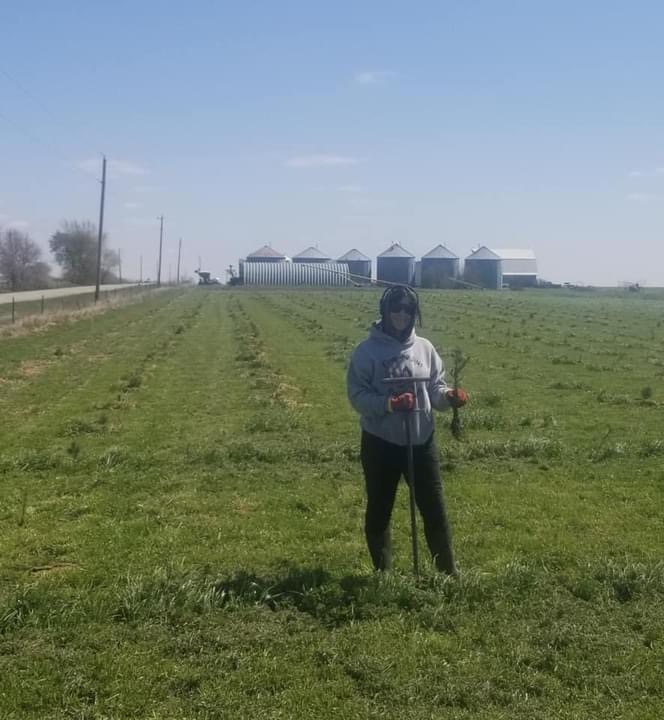
Here I am in 2021 planting my first Christmas trees.
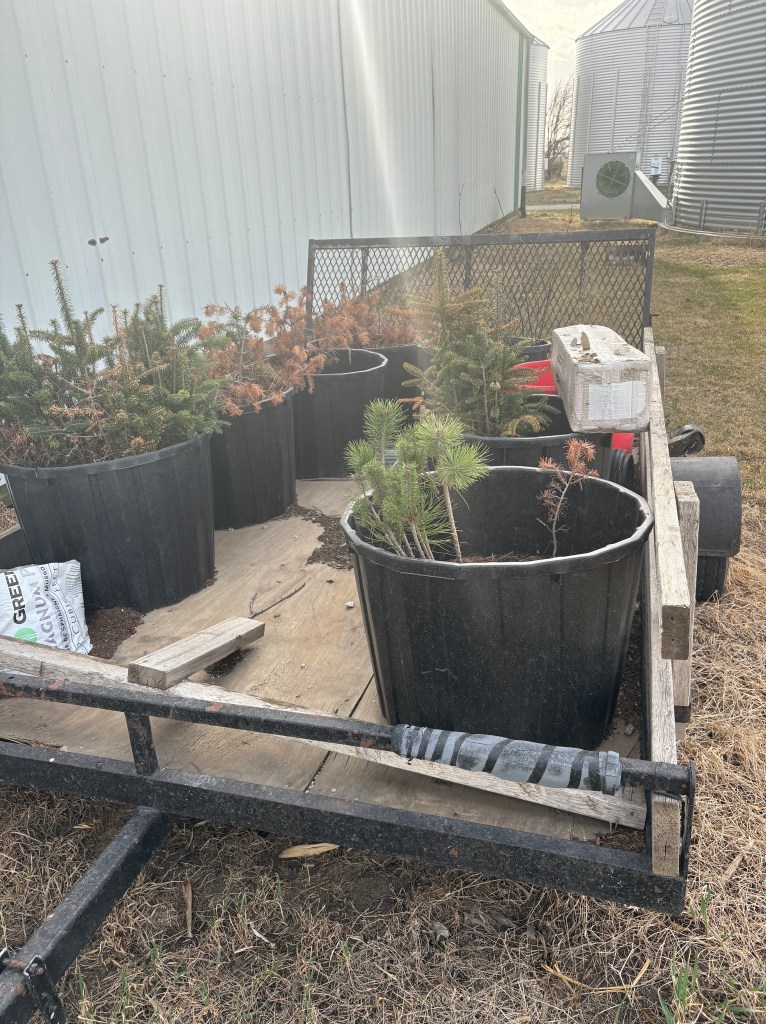
As you can see, I used a very low-tech system to plant my trees. I do not have a picture of my string lines but I had two to create a grid system. One ran north and south and one ran east and west. I have increments of every 8 ft. on the north and south line and every 10 ft. on the east and west line. I used a planting bar to insert every seedling.

This initial planting was about 1.5 acres as I wanted to plant incrementally and not have all my trees on the same growth schedule. I plant Concolor firs (my personal favorite), Scotch pines (fast growers), White pines, and Canaan firs. I usually plant twice as many Concolor firs because I love them, they are valuable, and I want other people to have them as well.
The second year, 2022, I added a south side to my planting which increase my acreage area to about 2.5 acres but I planted in a different fashion. Not sure I would do it again, but it was easier. I also replanted at least 100 trees within my first-year planting that did not survive.
For the planting on the south side, I allowed for an approximate 20 ft. alley down the middle of the two plots. I then took a tiller on the back of a garden tractor and tilled up 5 rows about 12 feet apart. I then came back with a wooden stick 10 feet long and I went down the row planting trees my wooden stick length apart. This planting was much more easy and more spacious but, as we go on, I am not sure this was the best choice. It will be far less profitable as I plant many less trees per acre, but shopping for trees will be a better experience. We will see.
In 2023 I replanted all the holes and added another section onto the North grid. the addition was ten trees by twelve trees. I am only starting about 120 trees a year, but my die of rate was terrible for unknown reasons, so I planted around 400 trees this year.
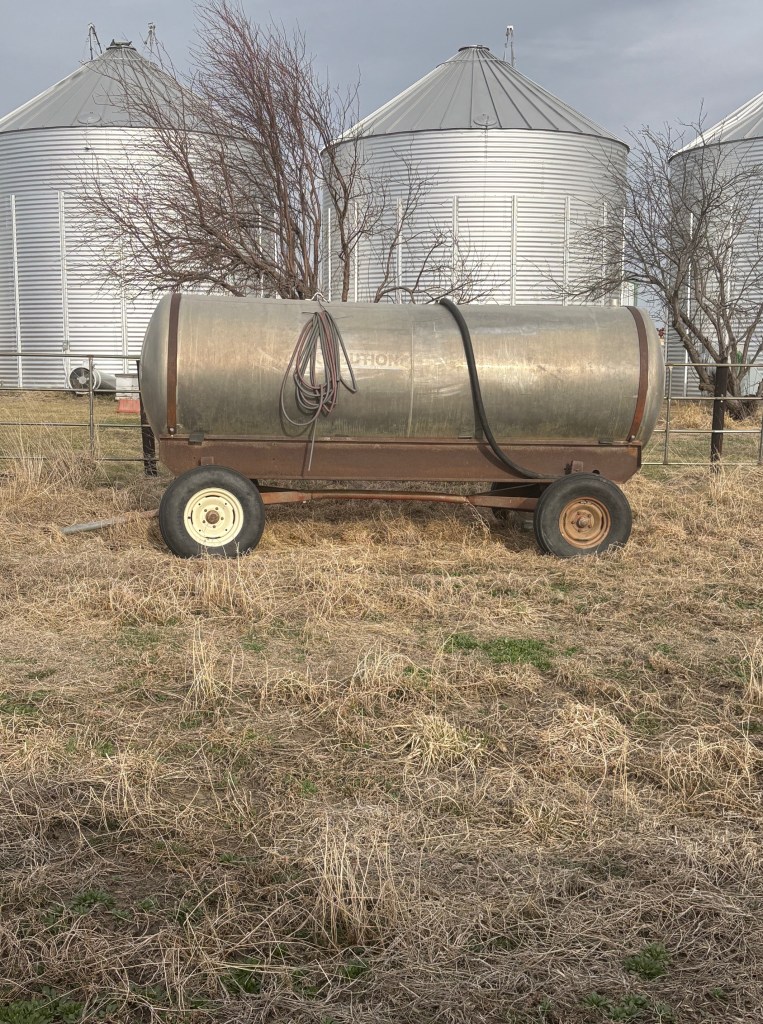
I irrigate with a hose being gravity fed by this water tank. It is slow and tedious. But we have had pretty dry patches in the past few summers and even though I try to plant in late March or Early April to allow the seedlings to catch the spring rainfalls and time to tap their roots into the ground there is not always enough moisture to keep them alive. If we haven’t gotten rain for a few weeks I try to give them all a nice shower.
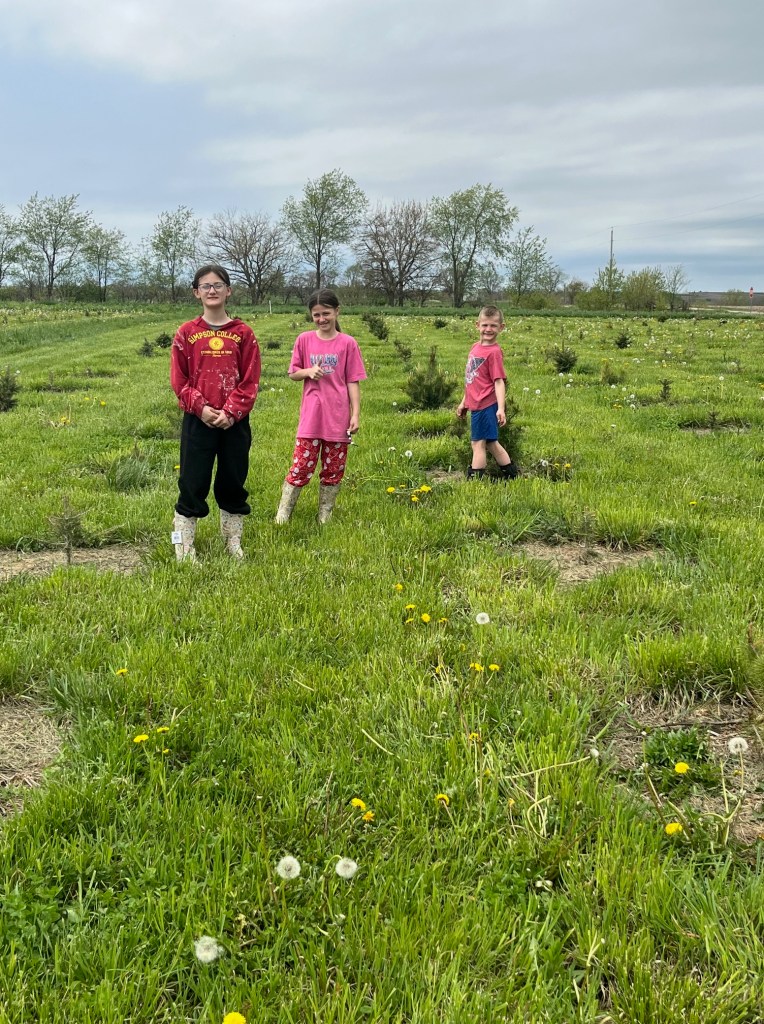
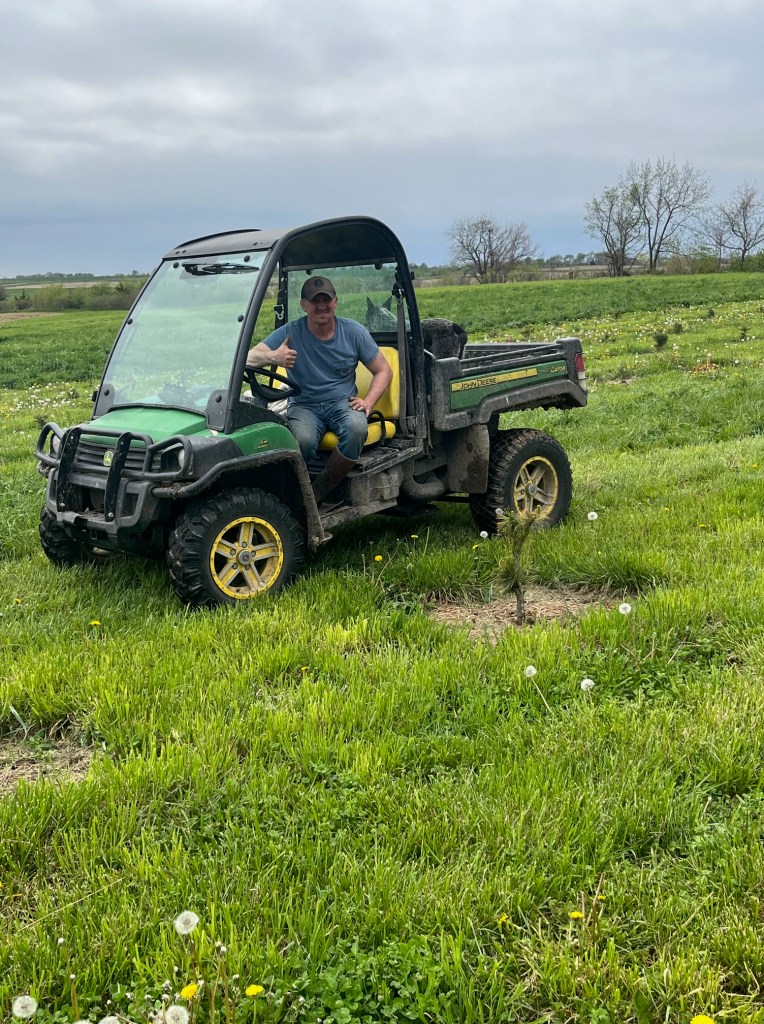
Last year, 2024, I planted another 10 x 12 section of trees and had another enormous replanting year. There were ants under all my dead trees by the thousands. I had my dad, who is an agronomist, come look at them and we couldn’t really figure out why this was happening. The only thing we could figure is there was some sort of bacteria or fungus on the roots which made a great food source for the ants to come in and colonize. I treated all these area with insecticide crumbles and replaced with another seedling. As the year went by I had some success with this, but there are still some trees that died out and I will probably let these spots rest for a year and replant in 2026 to see if I have any better luck.
Work schedule
Planting happens from March into April when I have time and the weather permits. It usually happens in the mornings or evenings and sometimes my family will come to assist me. After planting you have to spray herbicide consisting of a post-emergent (generic Round-up) and a pre-emergent (Prowl H20) about 18 inches radius around each tree, so the weeds and grass do not stunt the trees’ growth. You also have to mow in between all the trees regularly until about mid-August so the grass does not overgrow and shade the seedlings out. Once mid-late August hits you don’t have to mow anymore because the trees need some wind block and insolation for the coming winter. This is also the time I take inventory of my trees that did not survive and I order my trees from my favorite nursery, New Life Nursery, in Michigan (Home – New Life Nursery). Overall, I would estimate I spend 10-12 hours a week tending to the trees if I am not watering. Irrigation of the 3 acres takes me about 12 hours.
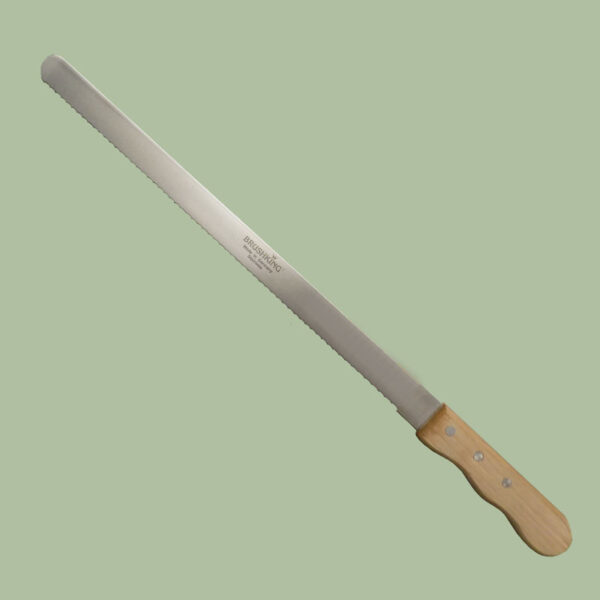
I have also started to trim my trees in late June or early July. And when doing this is I trim the leader to 12 inches with my pruners and then shape the rest of the tree with me shearing knive (see right image). You want to do this when the new growth is green and soft so you don’t have to exert to much energy.
Profitabity/Investment
I have spent about $1200 every year on trees give or take a few hundred dollars. The chemical costs about $300 annually. Mowing, equipment costs of the gator and trailer, and my time are items I do not really put a value on because I do this when I am not working on our conventional farming and we use the mower and side-by-side for our other operations as well.
When we harvest these trees I can get anywhere from $50-$120 a tree and I intend to sell at least 100 of them a year. You could sell more if you had a bigger plot of trees but my husband won’t share more with me so I am constricted to my 5 acres. Overall, if you are patient, you can make a profit on your journey of Christmas tree farming if you are willing to put in the work.
Resources
Now that I have trees that are about 4 feet tall I can think about the future of selling them. I have joined the Iowa Christmas Tree Association (About – Iowa Christmas Tree Assoc) and am excited to see what others in the State are doing. There are only about 100 growers in the state of Iowa and in our county there is one farm that cannot keep up with the demand.
Since the day I planted my first plot of trees, I have had many people ask me when my trees will be ready so they can come and get one. It takes anywhere from 6-12 years for trees to be ready to harvest so it will still be a few years, but I intend to continue this journey and see where it takes us.

 Farmalltheways.org
Leave a comment